
Our Integrated Approach to IC
The Tree Of Health
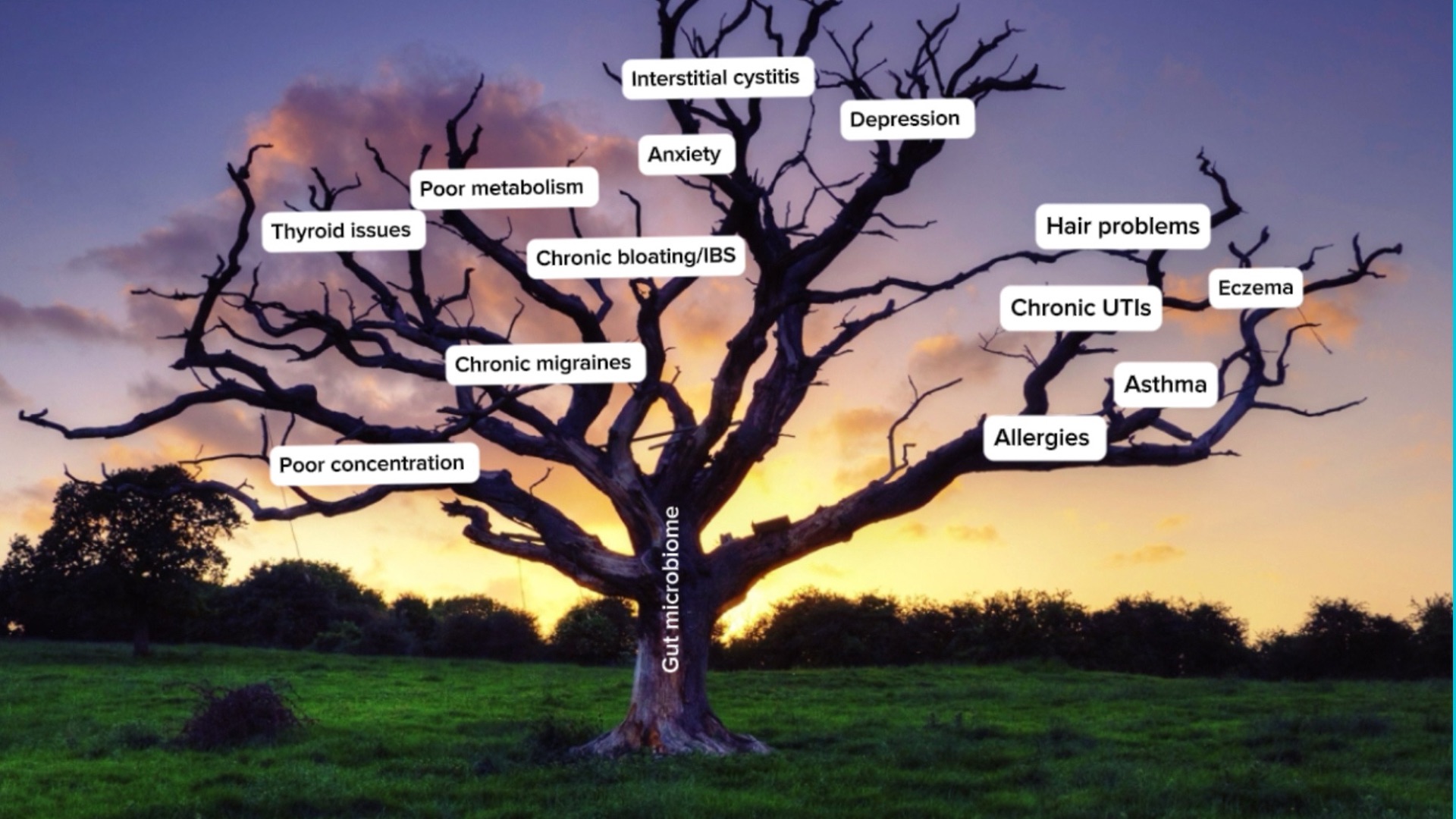
The Tree Of Health is a metaphor for chronic illness and healthy balance. This illustrates our model for the GUT microbiome being the center of both: sickness and health. When the GUT microbiome is healthy (the tree trunk), it feeds the branches and the leaves, they are both healthy, supple, and vibrant. IF the GUT microbiome (tree trunk) is unhealthy, the branches will be dry, unhealthy, and unable to produce healthy green leaves. The branches represent different forms of chronic conditions, but the main cause of those conditions is the same dynamic. This is a critical concept to grasp and is the root concept (no pun intended) of our work.

Herbal Protocol
We are each unique individuals. The conditions we suffer from are equally as unique based upon the factors that lead us to them and the factors that are keeping us there. There is not a one size fits all protocol for each person.
Our approach encompasses the use of diet, which begins as very restrictive and broadens with time as the inflammation reduces. This process is in conjunction with lifestyle adjustments and natural supplementation including Chinese and Western herbs and supplements. Although the treatments are quite similar, how each person goes through the protocols and the process is very different.
We are here to help you learn what things may have contributed to your chronic condition, help you begin the journey to correct them, and learn a different method of future healthcare.
DIET
Our stage-based diet guide helps you gradually reduce inflammation while restoring gut health. Each stage builds upon the previous one, expanding your food options as your body heals.
PROTEIN
FOR CARNIVORES:
Most fresh red meats, lamb, fish and shellfish, and fowl, eggs (NON OMEGA RICH EGGS) avoid pork, milk and cheese (although mozzarella may be ok) should be withheld initially. If eating meat, PLEASE find a local farmer and do not support factory farms. They practice unnecessary cruelty. The closest thing to humane farming is small local.
FOR VEGETARIANS AND VEGANS:
Black beans, and white beans, almonds, cashews, pea milk (Ripple Zero Sugar is a great one) home-made almond milk, cashew milk.
VEGETABLES
Broccoli, cauliflower, lettuce, cucumbers, celery, yellow squash, zucchini, green cabbage, red cabbage, Chinese cabbage.
STARCH
Although we more often recommend a gluten free and grain free diet for those suffering from severe imbalance at stage one, we find that some patients do well with small amounts of grain. In these cases, we recommend basmati rice at this early stage, but no other grains or gluten. For others, potatoes is a good beginner choice.
FATS
Butter, olive oil, (sunflower oil, avocado oil, and safflower oil in small amounts)
SPICES
Garlic powder that is pure without additives (eat cautiously, sometimes this is too strong for beginners), do not use cooked whole garlic until list 2, dried basil, sea salt or pink salt (usually tolerated in most individuals). Great Salad Dressing: olive oil, garlic powder (pure), and try adding a little dried basil for extra flavor. Later stages add lemon.
DRINKS
Filtered Water: Good quality water is critical to health! Black tea made with the water that works best for you. If you are a coffee drinker, please choose french roast (it is best tolerated) we also recommend organic coffee only! Please make your coffee with the water you are finding works best for you. Please only use a drip coffee maker or french press.
All foods in STAGE 1, PLUS:
PROTEIN
Small amounts of provolone cheese, mozzarella cheese (not the kind packed in water, bacteria can grow in this)
VEGETARIANS AND VEGANS:
vegan cheese if you can find one that is safe ingredients, peas.
VEGETABLES
Asparagus, arugula, artichokes, all cabbages, broccoli rabe, broccolini, endives, escarole, collard greens, chard, kale, brussel sprouts, spinach, zucchini, bell peppers-yellow first, then red and cooked first-if ok cooked then try raw, avocado (technically a fruit), cooked onions in small quantities.
FATS
No change.
STARCH
Add quinoa, buckwheat, millet, quinoa pasta, buckwheat pasta, almond pasta, bean pasta.
DRINKS
Add in green tea
All foods in Stage 2 PLUS:
PROTEIN
More “hard” mild cheeses, plain yoghurt. Milk is safe to try and include in this stage, if again, if you choose animal products, you may consider raw milk, it’s contains more vitamins, minerals, and enzymes may be included in recipes, and trying to include in small amounts and build it up.
VEGETARIANS AND VEGANS:
Add in chick peas and kidney beans.
VEGETABLES
Tomatoes (really a fruit-homemade sauce can be made from this), carrots, all bell peppers-make sure you are ok with them, green beans (be careful with this one), spaghetti squash, acorn squash, peas, bamboo shoots, turnip, okra, leeks, jicama, onions, radicchio, bok choy.
FATS
Add in avocado oil. Great for high heat cooking. Grapeseed oil also!
STARCH
Sweet potatoes and yucca (AKA cassava, AKA tapioca)
FRUITS
Avocados, blueberries, raspberries, blackberries, green apples, pears, grapefruit, lemons.
SPICES
Try adding in some very mild spices such as dill, rosemary, thyme etc.. staying away from turmeric, ginger, cumin, and cinnamon, etc..just yet.
DRINKS
Try adding sparkling water, the less bubbly ones first. Peppermint tea. Ginger tea very lightly made. Organic is best and if you get these fresh herbs, bringing them to a boil and then simmering for five minutes and drinking makes a great tea!
All foods in Stage 3 PLUS:
PROTEINS
No major changes, except, add in more nuts-such as pine nuts, pecans, macadamia nuts, walnuts.
VEGETABLES
Beets, water chestnuts, all squashes.
FRUITS
Mangos, strawberries, tangerines, grapes, persimmons, figs, plums, peaches, kiwi.
SPICES
Try adding in more spices in small amounts. Healthy fruit or maple syrup or agave sweetened goodies in small amounts may be started. Remember these are treats, not daily foods if maple syrup or agave are used.
DRINKS
Cautiously add in more teas with our guidance on choices.
All foods in Stage 4 PLUS:
PROTEINS
Avoid peanuts almost always. These nuts have a very high fungal content as do pistachios. Sushi may be an option now-making sure to include ginger to protect against parasites and optimize digestion. Honey may be added here.
VEGETABLES
All vegetables, please limit soy to the occasional soy sauce, We discourage regular consumption of soy.
STARCH
Add oats and all other beans.
FRUITS
All fruit. We strongly discourage regular consumption of coconut.
SPICES
All spices, except added sugar. This should always be avoided as much as possible. If it is in a recipe at a regular meal it is fine, but avoid adding to food or having as a food itself such as cakes, cookies, etc… healthy fruit sweetening substitutes may be implemented. Find maple syrup, fruit or agave sweetened ketchup and other healthy condiments. Have fun finding and adding in new healthy foods. There are numerous kinds of healthy alternatives already prepared with fruit as cakes, pies, cookies, bars, etc…
DRINKS
Focus on water water water! Think about putting grapefruit, lemon or orange in your water if you want a little extra flavor.
Critical Considerations
Helpful Tips for Managing IC
Skin & Body Care
What you put ON your body is AS important as what you put IN your body! The skin is our largest organ. For the safest products when it comes to IC, we developed our line that grew out of our clinical experience: bomasense.com
Cleaning Products
It is very important to be certain that you are not using toxic ingredients in your home. Be mindful of skin contact and off-gassing from toxic ingredients which may increase inflammation.
Essential Oils
Hand Sanitizers & Hygiene
Personal Care Products
Home Improvements
Recreational Substances
Prescription Medication
Sex & Hygiene
Happiness & Mental Health
More Food Tips
Your Home
Making sure your home environment is happy and healthy is so important! If you think you have mold or other toxic materials that are contributing to your sickness, we strongly recommend getting an expert in the area of concern to come and assess your home.
Embrace The Lifestyle
This is a life-style change, it is not a temporary medical diet. These stages are meant to reduce the impact healthy and unhealthy foods are having on your inflammation while restoring the health of your GUT. Once you have reached Stage 5, it is time to think about your health long term and consider not returning to old habits that contributed to your Interstitial Cystitis (IC).
When you get sick, don’t run for a prescription, consider your options first. These are things we teach you here at BOMAMED and ICAMA, how to improve and maintain your health.
Feeding our bodies poor quality food and toxic chemicals, using medications inappropriately, and living out of sync with nature is what creates chronic illness. ICAMA strives to bring people back to balance whether that is through working with us or simply following our videos or postings. We are here to help, educate and offer hope.